
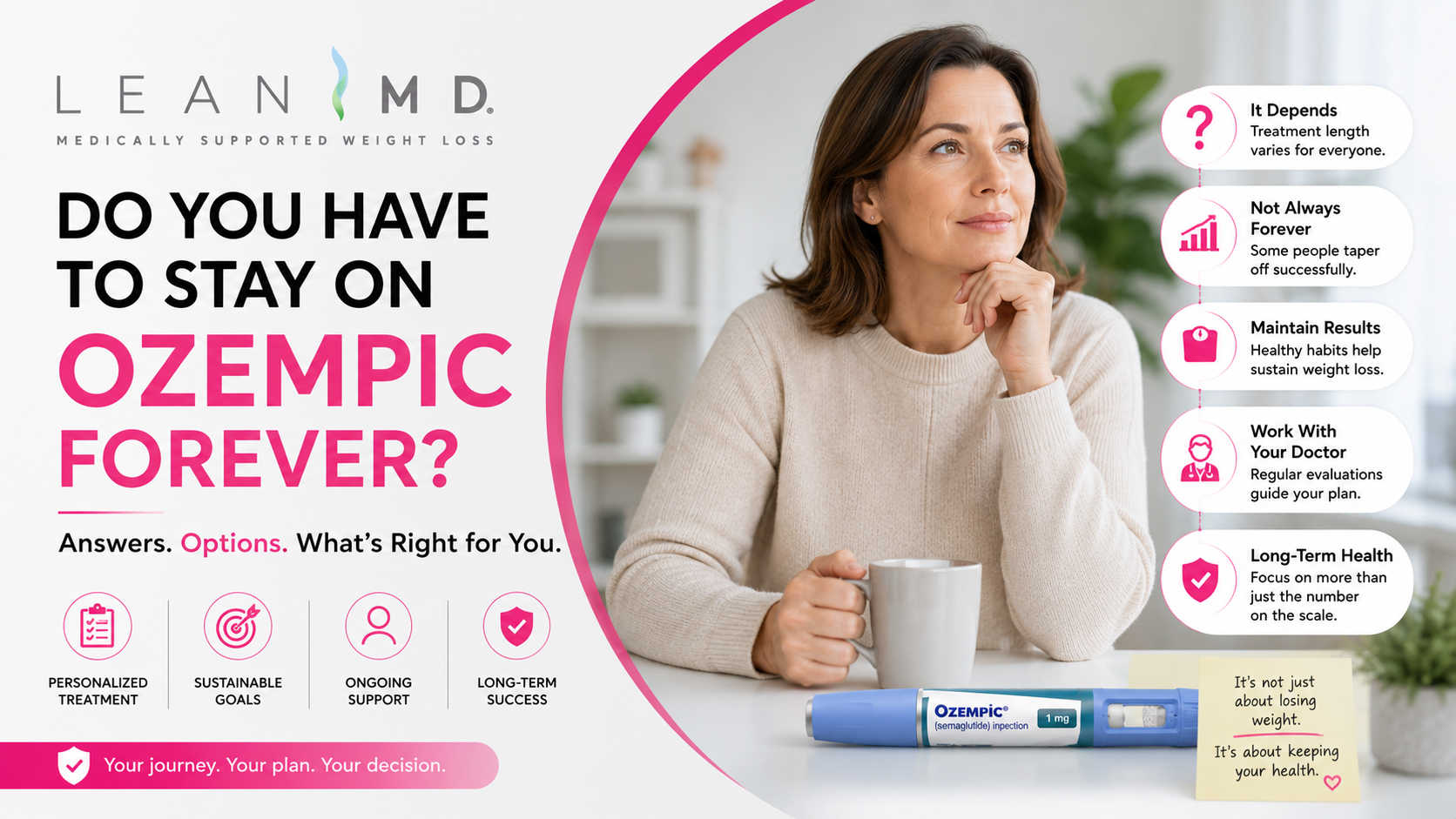
If you’ve started Ozempic (or any GLP-1 medication) — or you’re thinking about it — one question tends to keep you up at night: Do I have to stay on this forever?
It’s a fair question. These medications work, but they aren’t free, they require weekly injections, and the headlines about “rebound weight gain” are hard to ignore. The honest answer is more hopeful than the headlines suggest: No, you don’t necessarily have to stay on Ozempic forever — but how you come off it matters far more than the medication itself.
Let’s break down what actually happens when you stop, why some people regain weight, and how a structured, physician-supervised plan can help you keep your results for good.
The Short Answer
For many people, Ozempic is not a life sentence. Some patients use a GLP-1 medication for a defined period — to reach a goal, reset their relationship with food, and build sustainable habits — and then taper off successfully.
The catch? Stopping abruptly, without a plan, is the single biggest reason people regain weight. Ozempic isn’t magic and it isn’t a crutch you’re stuck with — it’s a tool. What you do while you’re on it, and how you transition off it, determines whether your results last.
Why People Think Ozempic Is “Forever”
The “forever” myth comes from a few real-world observations:
- Studies show weight regain after stopping. In clinical trials, participants who stopped semaglutide regained a significant portion of the weight they’d lost within about a year.
- Obesity is a chronic condition. Medical organizations treat obesity like other chronic conditions — meaning some patients genuinely benefit from longer-term medication, just as someone might stay on blood-pressure medicine.
- Many programs never teach the exit. A lot of “online prescription” services simply mail you the drug. They never help you build the habits or taper plan you need to eventually stop.
Here’s the nuance most headlines miss: the people who regain weight are often those who changed nothing else while on the medication. When the appetite suppression goes away, the old habits — and the weight — come right back.
What Actually Happens When You Stop Ozempic
When you stop taking a GLP-1 medication, a few things change:
- Your appetite returns. Ozempic works partly by slowing digestion and quieting “food noise.” Once it clears your system, hunger signals come back to their natural level.
- Cravings may increase. Foods that felt easy to skip can become tempting again.
- Weight can creep back — if habits haven’t changed. This is the “rebound” effect. It’s not inevitable; it’s a consequence of returning to old patterns.
The key insight: rebound weight gain is largely preventable. It happens when the medication was doing 100% of the work. If you’ve used your time on the medication to build new eating habits, protein-forward nutrition, and a movement routine, your body has a foundation to stand on when the medication tapers off.
Read More :- High Protein Diet for Weight Loss: A Complete Beginner’s Guide
The Muscle Problem Most People Overlook
There’s a hidden reason some people regain weight after stopping — and it has nothing to do with willpower.
Rapid weight loss on GLP-1 medications often means losing muscle along with fat. Muscle is metabolically active tissue — it’s a major driver of how many calories you burn at rest. Lose too much muscle, and your metabolism slows down. So when you stop the medication and your appetite returns, you’re now fighting against a slower metabolism, which makes regain easier and faster.
This is exactly why how you lose the weight matters as much as how much you lose. A muscle-first approach — protein-forward nutrition plus strength-focused movement — protects your metabolism so that life after the medication is sustainable.
This is the foundation of the LeanMD approach. We’re designed to help you lose fat, not strength — so your results hold up when you taper off.
How to Get Off Ozempic Without Gaining the Weight Back
You can come off Ozempic and keep your results. Here’s what a successful exit actually looks like:
1. Taper gradually — don’t quit cold turkey
Working with a physician to slowly reduce your dose gives your body time to adjust, rather than slamming the brakes and triggering a hunger rebound.
2. Build the habits while you still have appetite support
The window when your appetite is suppressed is the perfect time to lock in new routines: consistent protein, regular meals, and a movement habit. These become your safety net later.
3. Prioritize protein and strength
Protecting (or building) muscle keeps your metabolism humming. This is non-negotiable for lasting results.
4. Have a maintenance plan
Successful patients don’t just “stop.” They transition into a maintenance phase with continued coaching, monitoring, and accountability.
5. Stay supervised
A physician can monitor your progress, adjust the plan, and step back in if needed. You’re not doing this alone.
Read More :- How Long Do You Stay on Semaglutidefor Weight Loss?
The LeanMD 3-Phase Approach: Built for Life After Medication
Most programs focus only on losing the weight. LeanMD is built around keeping it off — and that includes helping you taper off medication when the time is right.
- Phase 1 — Weight Loss: Lose fat with medical supervision, protein-forward nutrition, and 1:1 coaching that protects your muscle.
- Phase 2 — Transition: The critical step most programs skip. We help you adapt to your new body and taper off medications gradually and safely.
- Phase 3 — Sustainable Weight Loss: Lock in your results for the long term with mindful eating, movement, and ongoing support.
This is the difference between renting your results and owning them.
So… Do You Have to Stay on Ozempic Forever?
For most people, no. Some patients benefit from longer-term use, and that’s a valid medical decision to make with your doctor. But Ozempic doesn’t have to be permanent. With a gradual taper, muscle-protective nutrition, and a real maintenance plan, you can come off the medication and keep the results you worked so hard for.
The medication is the tool. The lasting change comes from how you use it.
Read More :- Sustainable Weight Loss After 40
Frequently Asked Questions
Q.1 Will I gain the weight back if I stop Ozempic?
Not necessarily. Weight regain happens most often when nothing else changed during treatment. If you’ve built sustainable eating and exercise habits and protected your muscle, you have a strong foundation to maintain your results after tapering off.
Q.2 How long do most people stay on Ozempic?
It varies widely. Some people use it for several months to reach a goal and build habits, while others — particularly those managing obesity as a chronic condition — may benefit from longer-term use. A physician can help you decide what’s right for you.
Q.3 Is it safe to stop Ozempic suddenly?
It’s best to work with your doctor on a gradual taper rather than stopping abruptly. Tapering helps your body adjust and reduces the appetite rebound that drives weight regain.
Q.4 Why do people regain weight after stopping GLP-1 medications?
Two main reasons: appetite returns to normal, and rapid weight loss may have cost them muscle, which slows metabolism. Combined, this makes regain easier — unless new habits and muscle have been protected along the way.
Q.5 Can a weight-loss program help me get off Ozempic?
Yes. A structured, physician-supervised program like LeanMD includes a dedicated transition phase designed to help you taper off medication safely while maintaining your results.
Ready to Lose Weight — and Keep It Off?
You don’t have to choose between staying on medication forever and gaining the weight back. LeanMD’s physician-led, muscle-first program is designed to get you results and help you sustain them.