
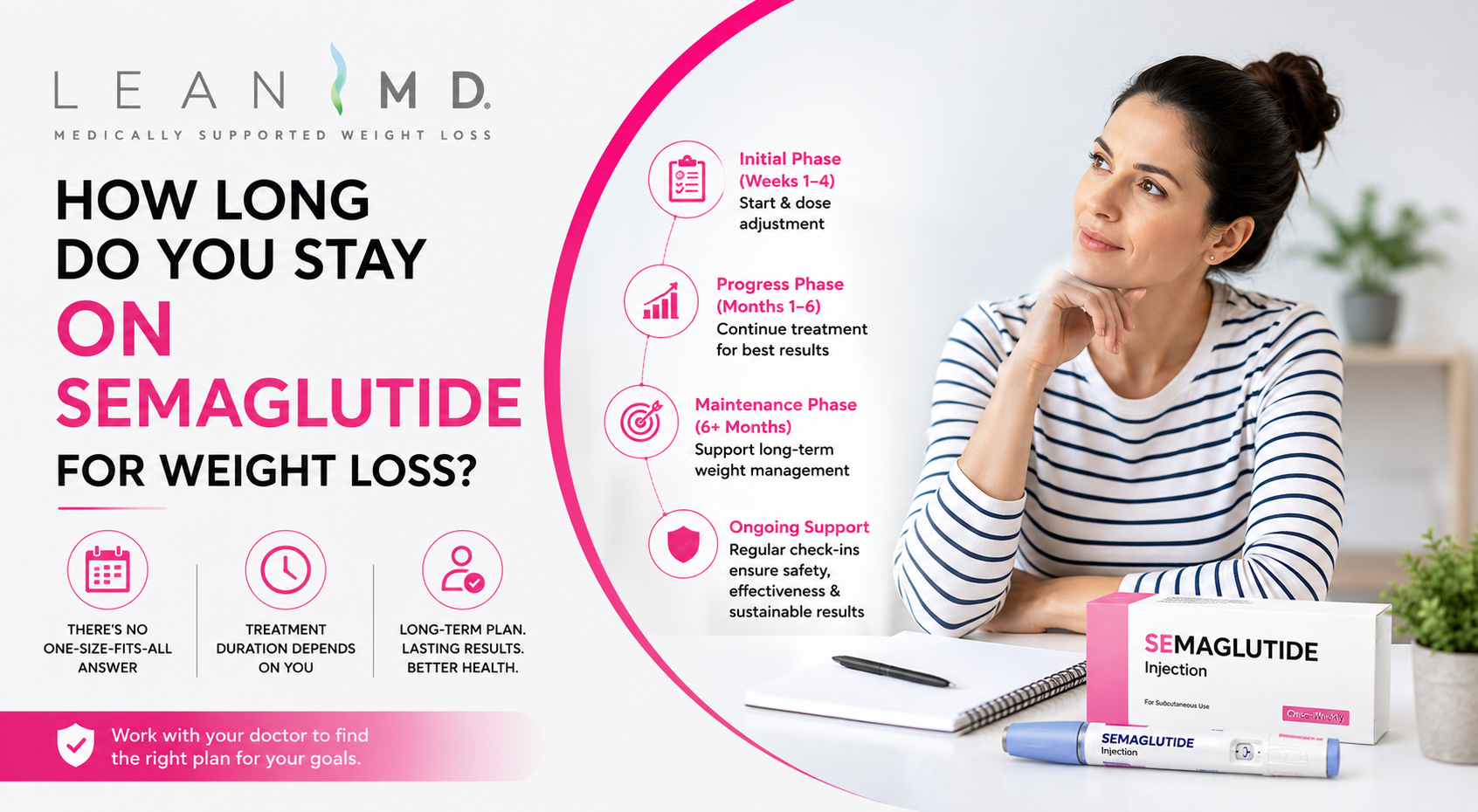
When patients start semaglutide, the most common question after “will it work?” is: “How long will I need to take this?”
It is an important question — and the answer is more nuanced than most online sources let on. The duration of semaglutide treatment is not one-size-fits-all. It depends on how much weight you need to lose, how you respond to the medication, whether you are building the habits that make weight maintenance possible, and whether the underlying medical factors driving your weight gain have been addressed.
What the science makes abundantly clear is this: stopping semaglutide prematurely — before building a foundation for sustainable maintenance — is the single biggest predictor of regaining the weight you lost.
| Quick Answer Most people stay on semaglutide for 12 to 24 months for meaningful weight loss. Medical guidelines classify it as a long-term or indefinite treatment — similar to blood pressure or cholesterol medication. Stopping early significantly increases the likelihood of regaining weight, as studies show most people regain two-thirds of lost weight within one year of stopping without a structured maintenance plan. |
| 68 wks Duration of landmark STEP clinical trials | 2/3 Of lost weight regained within 12 months of stopping (without plan) | 2 yrs STEP 5 trial — semaglutide remains effective at 24 months |
1. The Honest Answer: How Long Should You Stay on Semaglutide?
Major medical guidelines — including those from the American Obesity Association and the Endocrine Society — now classify obesity as a chronic, relapsing condition, not a temporary problem. This framing matters, because it changes how we think about treatment duration.
We do not tell people to take blood pressure medication for a year and then stop. We do not prescribe cholesterol medication with a planned end date. Semaglutide is increasingly being viewed the same way: as a long-term or indefinite medical tool for managing a chronic condition.
That said, clinical practice generally falls into these categories:
- Minimum effective duration: 12 months to see the full arc of weight loss and begin establishing maintenance habits
- Typical treatment duration: 18 to 24 months for patients with significant weight loss goals
- Long-term or indefinite use: Recommended for patients with obesity-related health conditions (type 2 diabetes, cardiovascular disease, sleep apnea) where the medical benefits of continued treatment outweigh the risks
| LeanMD Physician Perspective: We tell our patients that semaglutide is a tool, not a finish line. The goal is to use the months on medication to rebuild your relationship with food, establish a protein-first eating pattern, and develop movement habits that your body can maintain after the medication ends — or alongside it indefinitely. |
Read More :- High Protein Diet for Weight Loss: A Complete Beginner’s Guide
2. Month-by-Month: What to Expect on Semaglutide
Understanding what happens at each stage of treatment helps set realistic expectations and makes it clear why duration matters.
Months 1–2: Dose Escalation & Adjustment
Semaglutide starts at a low dose (0.25 mg/week) and increases gradually over 16–20 weeks to minimize nausea and GI side effects. Most patients experience appetite reduction within weeks, but significant weight loss typically begins at Month 2 or 3. Nausea, if it occurs, is usually worst in this phase.
Months 3–6: Active Weight Loss Phase
This is typically the period of fastest weight loss as the dose reaches therapeutic levels (1.7 mg or 2.4 mg/week for Wegovy). Most patients lose 5–8% of body weight during this phase. Hunger is significantly reduced. This is when building protein habits and starting resistance exercise matters most — to ensure the weight being lost is fat, not muscle.
Months 6–12: Continued Loss + Plateau Management
Weight loss continues but usually slows. Many patients encounter a plateau around months 6–9 as the body adapts. This is normal and does not mean the medication has stopped working. Total weight loss in this phase commonly reaches 10–15% of body weight. A physician review of nutrition and activity is important here.
Months 12–24: Consolidation & Habit Building
By 12 months, most patients are near their maximum semaglutide-assisted weight loss. The second year is critical: it is when the habits that will determine long-term success must be solidified. Patients who use this period well — building muscle, establishing sustainable nutrition patterns, addressing sleep and stress — are far more likely to maintain their results.
24+ Months: Long-Term Maintenance Decision
At this point, patients and their physician make a shared decision: attempt a carefully managed tapering and transition to maintenance, or continue long-term medication for ongoing metabolic management. This decision depends on individual health status, goals achieved, habits established, and presence of obesity-related conditions.
3. What Clinical Trials Actually Show
The most important clinical data on semaglutide duration comes from the STEP trial series. Here is what they found:
STEP 1 — 68 Weeks of Treatment
The primary STEP 1 trial ran for 68 weeks (about 16 months). Participants taking semaglutide 2.4 mg lost an average of 14.9% of body weight. This foundational evidence established semaglutide’s effectiveness — and note that 68 weeks is significantly longer than most people initially expect to be on the medication.
STEP 4 — The Stopping Evidence
The STEP 4 trial is perhaps the most clinically important study for understanding duration. After 20 weeks of treatment, participants were randomly assigned to either continue semaglutide or switch to placebo for another 48 weeks.
The results were stark. Those who continued lost an additional 7.9% of body weight. Those who switched to placebo regained 6.9% of body weight — nearly all they had lost in 20 weeks — within the same timeframe. This study is the clearest evidence that stopping semaglutide early reverses most of the weight loss achieved.
STEP 5 — Two Full Years of Data
STEP 5 followed patients for 104 weeks (2 years) of continuous semaglutide use. Average weight loss was 15.2% — slightly higher than the 68-week trial — and the medication remained effective and well-tolerated throughout. There was no evidence of declining efficacy over two years of continuous use.
| ⚠️ Key Clinical Takeaway: The evidence is consistent: the longer you stay on semaglutide within a physician-supervised program with proper nutritional support, the more weight you lose and the better your outcomes. Stopping early dramatically increases the risk of weight regain. |
Read More :- Best GLP-1 Drugs for Weight Loss: The Complete Guide
4. When to Continue vs. When to Consider Stoppin
Here is an honest comparison of the medical reasons that should guide this decision — made with your physician, never unilaterally:
| ✓ Reasons to Continue | ✗ Reasons to Consider Stopping |
| Still actively losing weight or in maintenance | Weight goal reached and stable for 6+ months |
| Obesity-related conditions still present | Persistent intolerable side effects |
| Lifestyle foundation not yet fully established | Pregnancy planned or confirmed |
| History of weight cycling after previous diets | Physician-confirmed contraindication |
| Physician recommends ongoing metabolic management | Cost unmanageable — discuss options with physician |
Important: Cost and inconvenience are not medically valid reasons to stop prematurely. If access or affordability is an obstacle, speak to your LeanMD physician about options, including dose adjustments or transition planning.
5. What Happens When You Stop Semaglutide?
Semaglutide works by amplifying the GLP-1 hormone signal in your body — reducing appetite, slowing gastric emptying, and quieting what researchers call “food noise.” When you stop taking semaglutide, these hormone effects reverse within days to weeks.
The Weight Regain Evidence
- Most patients regain 50–70% of lost weight within 12 months of stopping without a structured maintenance plan
- Hunger and cravings typically return to pre-treatment levels within 2–4 weeks of stopping
- Metabolic improvements (blood sugar, blood pressure, lipids) also partially reverse after stopping
- Patients who built strong protein and exercise habits during treatment maintain significantly more of their weight loss
| The Right Framing: Weight regain after stopping semaglutide is not a failure — it is a predictable biological response. The medication was managing a chronic condition. Stopping it without a transition plan is like stopping blood pressure medication and being surprised when blood pressure rises. This is why the decision to stop must be made with a physician and with a concrete maintenance strategy already in place. |
6. The Muscle Loss Factor Nobody Talks About
There is a critical dimension of semaglutide duration that most sources overlook: the composition of the weight you lose matters enormously, and it directly affects how well you maintain results after stopping.
Studies show that on GLP-1 medications without proper protein intake and resistance exercise, up to 40% of total weight lost can come from muscle, not fat. This matters because:
- Muscle is your primary metabolic engine — each kilogram burns approximately 13 calories per day at rest
- If you lose significant muscle during your semaglutide program, your maintenance calorie needs drop — making it much easier to regain weight after stopping
- Rebuilding muscle after losing it is significantly harder than preserving it in the first place
- People who lose mostly fat (not muscle) during their semaglutide program maintain weight loss far better after tapering off
| LeanMD’s Muscle-First Protocol: Every LeanMD patient on semaglutide receives a personalized protein plan targeting 1.2–1.6g per kg of body weight, plus structured guidance on resistance exercise. This muscle-first approach is what allows our patients to taper off semaglutide with confidence — because they have built the metabolic foundation to maintain their results. |
7. Planning Life After Semaglutide: The LeanMD Approach
For patients who reach a point where stopping makes clinical sense, a successful transition does not happen overnight. Here is what a physician-guided transition plan looks like:
- Stabilize at goal weight for at least 3–6 months before beginning a taper — this confirms your habits are working, not just the medication
- Gradual dose reduction rather than abrupt cessation — typically stepping down over 2–3 months to allow appetite to readjust slowly
- Protein targets remain non-negotiable — maintaining 1.2–1.6g/kg/day is the single most evidence-supported dietary habit for weight maintenance
- Resistance exercise at least 2–3 times per week — muscle mass is your metabolic insurance policy after stopping
- Regular physician check-ins — monthly weight and metabolic monitoring during and after tapering catches any concerning regain early
- Clear re-engagement plan — agree in advance with your physician on the weight threshold that would prompt restarting medication
| Start Semaglutide the Right Way — With a Plan for After LeanMD’s physician-supervised program combines FDA-approved semaglutide with the nutrition coaching and muscle-preservation protocol that makes results last — not just while you’re taking it. Visit leanmd.com to find a LeanMD physician near you in California. |
Frequently Asked Questions
Can I take semaglutide indefinitely?
Yes. Current medical guidance treats obesity as a chronic condition, and long-term or indefinite semaglutide use is considered appropriate for patients with ongoing obesity-related health conditions. The STEP 5 two-year trial showed semaglutide remains safe and effective with no loss of efficacy, and there is no known ceiling on safe duration under physician supervision.
What is the minimum time you should take semaglutide?
Most physicians recommend a minimum of 12 months to complete the full dose escalation period, achieve meaningful weight loss, and begin building the lifestyle habits that support long-term maintenance. Stopping before 12 months significantly increases the likelihood of weight regain without having built the foundation to prevent it.
Will I regain weight when I stop semaglutide?
Without a structured maintenance plan, most people regain 50–70% of lost weight within 12 months of stopping. However, patients who built strong protein-based nutrition habits, maintained muscle mass through resistance exercise, and followed a physician-guided tapering plan maintain significantly more of their weight loss. The outcome depends heavily on how the treatment period was used, not just the medication itself.
How do I know when I’m ready to stop semaglutide?
You are in the best position to consider stopping when: you have been at a stable goal weight for at least 3–6 months; you have established consistent protein intake and resistance exercise habits; your obesity-related health conditions have improved; and you and your physician have agreed on a monitoring plan and re-engagement threshold. This decision should never be made without physician oversight.
Does semaglutide become less effective over time?
No. The STEP 5 two-year trial showed semaglutide remained effective throughout without loss of efficacy. Weight loss typically slows after the first 6–12 months as the body reaches a new equilibrium — often mistaken for the medication “stopping working.” This is normal metabolic adaptation, not pharmacological tolerance. A physician review of nutrition and activity can help during plateaus.
What happens to my metabolism after stopping semaglutide?
When you stop semaglutide, appetite-suppressing hormone effects reverse within days to weeks, and hunger typically returns to pre-treatment levels. If you lost significant muscle mass during treatment, your resting metabolic rate will also be lower — making weight maintenance harder. This is the strongest argument for prioritizing muscle preservation throughout treatment. Patients who maintained muscle mass experience a much smoother metabolic transition after stopping.
Medical Disclaimer
This article is for informational purposes only and does not constitute medical advice. Semaglutide requires a prescription and physician evaluation. Treatment duration should be determined in consultation with a qualified healthcare provider. Individual results vary. LeanMD’s program is physician-supervised and individualized for each patient.