
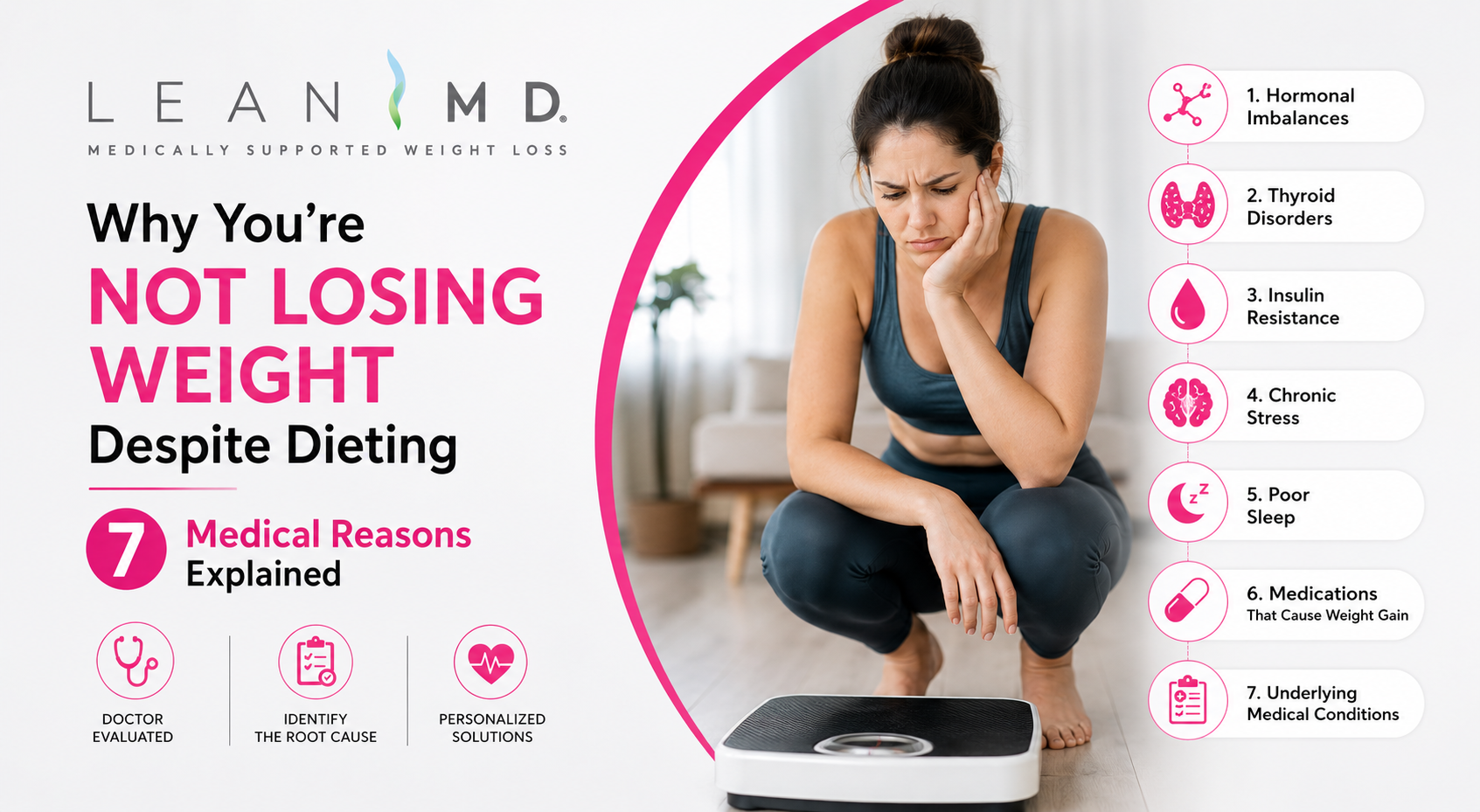
You’re eating less. You’re skipping dessert. You’re tracking your calories faithfully. And yet the scale won’t budge.
If this sounds familiar, you are not alone, and more importantly, you are not imagining it. Millions of people follow their diets closely and still struggle to lose weight. The frustrating truth is that willpower and calorie-cutting are rarely the whole picture.
The human body is a complex biological system. When weight loss stalls, there is almost always a medical explanation not a character flaw. Understanding what is happening inside your body is the first step toward actually fixing it.
Here are seven evidence-based medical reasons why you may not be losing weight, even when you’re doing everything right.
1. Insulin Resistance Is Blocking Fat Burning
Insulin is the hormone that helps your cells absorb glucose (sugar) from the blood. When your cells stop responding to insulin properly a condition called insulin resistance your body compensates by producing more of it.
High insulin levels are a powerful signal for your body to store fat, especially around the abdomen. Even if you are eating fewer calories, elevated insulin can make it physiologically very difficult to burn stored fat.
Insulin resistance is extremely common, affecting an estimated 40% of American adults, and many people have it without knowing. It often develops gradually from years of eating processed foods, poor sleep, and physical inactivity.
Signs you may have insulin resistance:
- Belly fat that won’t budge despite dieting
- Strong sugar cravings, especially after meals
- Energy crashes in the afternoon
- Darkened skin patches around the neck or armpits (acanthosis nigricans)
- Fatigue after eating carbohydrate-rich meals
| What LeanMD does differently: Our physician-supervised program includes metabolic assessment to identify insulin resistance early. We use protein-forward nutrition strategies specifically designed to lower insulin levels and restore your body’s ability to burn fat effectively. |
2. Your Thyroid Is Underperforming
The thyroid gland, a small butterfly-shaped gland in your neck, controls your metabolic rate — basically how fast your body burns energy. When it produces too little thyroid hormone, a condition called hypothyroidism, your metabolism slows down significantly.
People with hypothyroidism can experience a metabolic rate that is 20 to 40 percent lower than normal. This means your body burns hundreds fewer calories per day than it should — making weight loss feel nearly impossible regardless of how little you eat.
Hypothyroidism affects approximately 20 million Americans, and up to 60 percent are undiagnosed. Women over 35 are at the highest risk.
Common symptoms of an underactive thyroid:
- Unexplained weight gain or inability to lose weight
- Persistent fatigue, even with adequate sleep
- Feeling cold when others feel comfortable
- Hair thinning or hair loss
- Constipation and slowed digestion
- Depression or brain fog
A simple blood test measuring your TSH (thyroid-stimulating hormone) levels can confirm whether your thyroid is functioning properly. If you have never had this checked, it is worth asking your doctor.
3. Chronic Stress Is Keeping Cortisol Too High
When you are under stress — whether from work, relationships, financial pressure, or even the stress of dieting itself — your body releases cortisol, often called the ‘stress hormone.’ In short bursts, cortisol is helpful. When it stays elevated chronically, it creates serious obstacles to weight loss.
High cortisol promotes fat storage, particularly visceral fat around the abdomen. It also increases appetite, triggers cravings for high-calorie comfort foods, and breaks down muscle tissue — the opposite of what you want when trying to lose weight.
Research has shown that sleep deprivation alone — even just one or two nights of poor sleep — significantly raises cortisol levels and disrupts the hunger hormones leptin and ghrelin, causing you to eat more the next day.
Read More :- How to Maintain Weight Loss After a Medical Program
The cortisol-weight connection in practice:
- High stress increases appetite and cravings for sugar and fat
- Elevated cortisol directs fat storage toward the abdomen
- Poor sleep raises cortisol, which raises appetite the next day
- Extreme calorie restriction is itself a physical stressor that raises cortisol
4. You Are Losing Muscle Instead of Fat
Not all weight loss is equal. When you cut calories drastically without adequate protein and resistance exercise, a significant portion of the weight you lose comes from lean muscle tissue — not fat.
This matters enormously because muscle is metabolically active tissue. It burns calories around the clock, even at rest. Losing muscle reduces your resting metabolic rate, meaning you burn fewer calories every day. This creates a cycle where you need to eat less and less just to maintain the same weight, eventually leading to a complete plateau.
This is a particularly common problem with GLP-1 medications like semaglutide when used without proper nutritional support. The rapid weight loss these medications can produce often includes a significant amount of muscle loss.
How to tell if you’re losing muscle instead of fat:
- The number on the scale drops, but you still look ‘soft’ or undefined
- You feel weaker than before starting your diet
- Your metabolism feels slower — you need fewer calories to maintain weight
- Fatigue and low energy despite eating enough
| LeanMD’s Muscle-First Approach: Protecting your muscle mass is the foundation of the LeanMD program. Through personalized protein guidance, 1:1 coaching, and strength-focused movement plans, we ensure you lose fat — not strength. Our approach prevents the metabolic slowdown that causes most diets to fail long-term. |
5. Your Gut Microbiome Is Out of Balance
The gut microbiome — the trillions of bacteria, fungi, and other microorganisms living in your digestive tract — plays a more significant role in weight regulation than scientists once believed.
Research has shown that people with obesity tend to have less diverse gut microbiomes, with higher proportions of bacteria that are more efficient at extracting calories from food. This means two people can eat the exact same meal and absorb different amounts of energy from it based on their gut bacteria.
An imbalanced microbiome can also drive inflammation, increase intestinal permeability (sometimes called ‘leaky gut’), disrupt appetite-regulating hormones, and impair insulin sensitivity — all of which make weight loss harder.
Factors that disrupt your gut microbiome:
- Antibiotic use (even years ago)
- A low-fiber, processed food diet
- High alcohol consumption
- Chronic stress and poor sleep
- Artificial sweeteners (emerging evidence suggests these may negatively affect gut bacteria)
6. Hormonal Imbalances Related to Age and Menopause
Hormones govern nearly every aspect of how your body manages energy, appetite, and fat storage. As we age, several key hormones decline — and these shifts can make weight loss dramatically harder, even when your habits have not changed.
Estrogen and menopause:
As estrogen levels decline during perimenopause and menopause, the body tends to shift fat storage from the hips and thighs to the abdomen. Abdominal fat is more metabolically stubborn and more closely tied to insulin resistance. Many women find that approaches that worked in their 30s simply stop working in their 40s and 50s because of this hormonal shift.
Testosterone in men:
Testosterone supports muscle mass and fat burning in men. After age 30, testosterone naturally declines by about 1 percent per year. Low testosterone is associated with increased body fat, decreased muscle mass, and reduced energy — a combination that significantly slows metabolism over time.
Leptin resistance:
Leptin is the hormone that signals to your brain that you are full and have enough energy. In many people with obesity, the brain becomes resistant to leptin’s signals — meaning you feel hungry even when you have more than enough stored energy. This creates a biological drive to eat that is very difficult to override through willpower alone.
7. Your Medications May Be Causing Weight Gain
This is one of the most overlooked reasons for unexplained weight gain or weight loss resistance. Many common medications have weight gain as a known side effect — and if you recently started or changed a medication around the time your weight issues began, there may be a direct connection.
Common medications associated with weight gain:
- Antidepressants — particularly SSRIs like paroxetine and tricyclic antidepressants
- Antipsychotic medications — olanzapine, quetiapine, risperidone
- Diabetes medications — insulin, sulfonylureas, thiazolidinediones
- Beta-blockers for blood pressure — metoprolol, atenolol
- Corticosteroids — prednisone, cortisone
- Antihistamines — long-term use of diphenhydramine (Benadryl)
- Mood stabilizers — lithium, valproate
If you are on any of these medications and struggling to lose weight, do not stop taking them without speaking to your doctor. However, it is absolutely worth having a conversation about whether alternatives exist that have a more weight-neutral or even weight-positive profile.
So What Should You Actually Do About It?
The most important first step is recognizing that weight loss resistance is a medical issue, not a motivation issue. You deserve a solution that addresses the actual causes — not another generic diet plan that ignores the biological reality of what is happening in your body.
Here is a practical framework for moving forward:
- Get comprehensive blood work — Ask your doctor to check TSH (thyroid), fasting insulin, HbA1c, testosterone (men), and a complete metabolic panel
- Review your medications — Have an honest conversation with your prescriber about the weight impact of anything you are taking
- Prioritize protein and resistance exercise — This is non-negotiable for preserving muscle mass and supporting metabolism
- Address sleep seriously — Seven to nine hours of quality sleep per night is not optional for weight management
- Manage stress with real strategies — Not just advice, but structural changes: boundaries, routines, and support
- Consider medically supervised weight loss — Programs that combine physician oversight, personalized nutrition, and evidence-based medication produce results that self-directed dieting cannot match
Read More :- High Protein Diet for Weight Loss: A Complete Beginner’s Guide
| Ready to find out what’s actually holding you back? LeanMD’s physician-supervised program begins with a full medical assessment designed to identify the specific factors — hormonal, metabolic, nutritional — that are making weight loss difficult for you specifically. We don’t guess. We investigate. Visit leanmd.com to find a LeanMD physician near you in California. |
Frequently Asked Questions
Can I lose weight if I have hypothyroidism?
Yes, but it requires treating the thyroid condition first. Once your thyroid hormone levels are optimized through medication, weight loss becomes significantly more achievable — especially with a structured program that accounts for the slower metabolism associated with hypothyroidism.
Is a weight loss plateau always caused by medical issues?
Not always. Plateaus can also be caused by calorie creep (gradually eating more without realizing it), metabolic adaptation to a prolonged calorie deficit, or needing to adjust your exercise routine. However, if a plateau persists for more than 4 to 6 weeks despite genuine effort, a medical evaluation is warranted.
Can semaglutide help with weight loss resistance?
Semaglutide and other GLP-1 receptor agonists have demonstrated significant effectiveness for people with obesity, including those who have struggled with traditional dieting. They work by reducing appetite and slowing gastric emptying. However, they work best when combined with physician supervision and proper nutritional support — particularly to preserve muscle mass during the weight loss process.
How do I know if insulin resistance is causing my weight issues?
The most reliable way is through blood tests — specifically a fasting insulin level and fasting glucose, which can be used to calculate the HOMA-IR score. Some doctors also use HbA1c as a proxy. Physical signs like abdominal weight gain and persistent sugar cravings are useful indicators, but blood work provides confirmation.
Does stress really make it harder to lose weight?
Yes, this is well-supported by research. Chronic stress elevates cortisol, which increases appetite, drives cravings for calorie-dense foods, and promotes fat storage around the abdomen. Stress management is not a soft add-on to a weight loss program — it is a biological necessity for success.
Medical Disclaimer
This article is for informational purposes only and does not constitute medical advice. Always consult a qualified healthcare provider before making changes to your diet, exercise routine, or medication. LeanMD’s program is physician-supervised and personalized to each individual patient.