
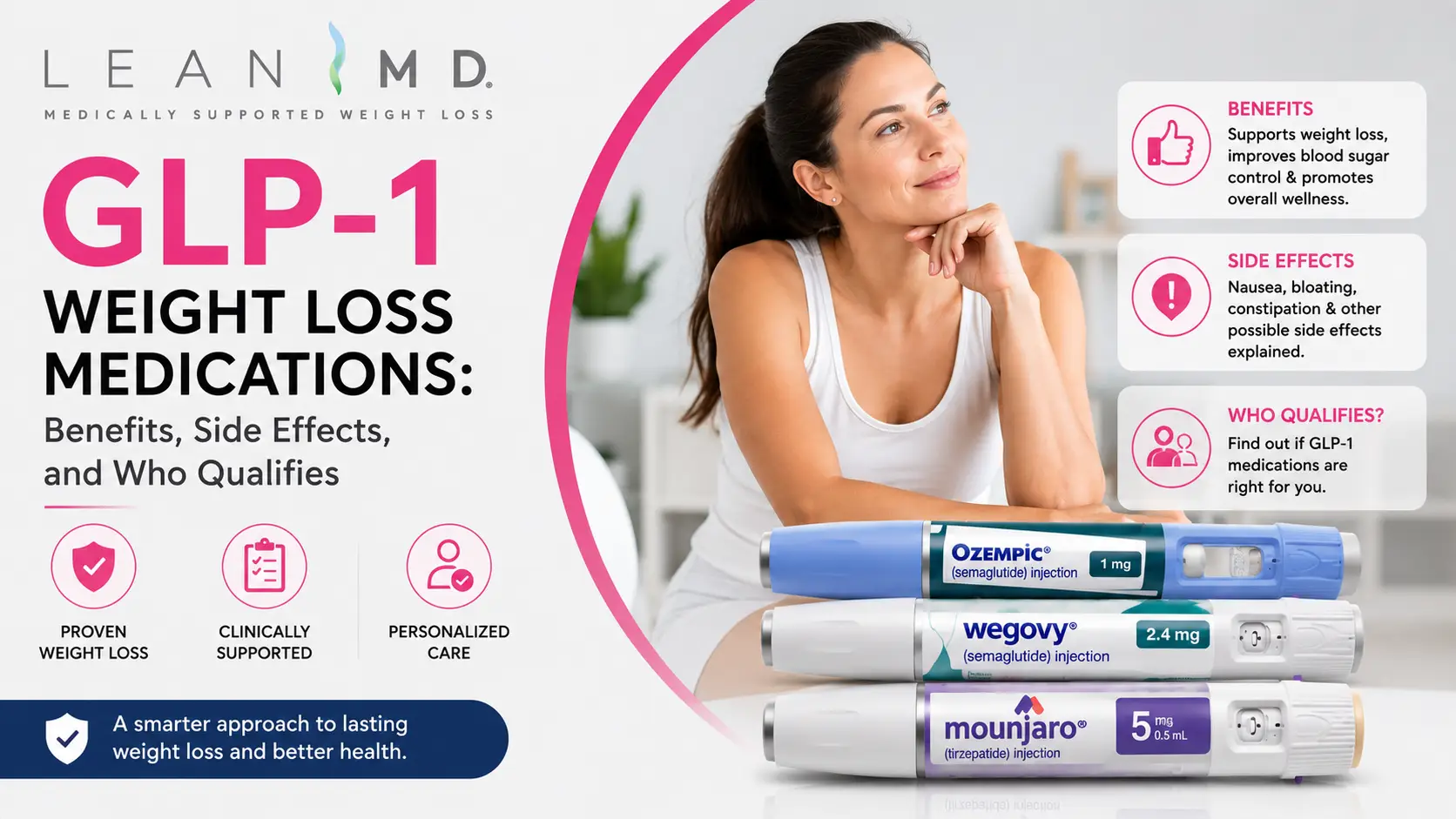
GLP-1 medications have become the most talked-about development in weight loss medicine in decades. From Ozempic’s rise to celebrity status to the clinical breakthrough of tirzepatide producing surgical-level weight loss results, these medications have fundamentally changed what is possible for people living with obesity.
But with enormous popularity comes enormous confusion and misinformation. What exactly do these medications do? What are the real benefits versus the real risks? Who genuinely qualifies, and who should avoid them?
This guide answers all of it clearly, clinically, and without hype in either direction.
| QUICK ANSWER GLP-1 weight loss medications work by reducing appetite, slowing digestion, and improving insulin response. FDA-approved options include semaglutide (Wegovy) and tirzepatide (Zepbound). You qualify with a BMI of 30+, or 27+ with a weight-related condition. Common side effects include nausea, constipation, and fatigue — most resolve within weeks. Physician supervision is essential for safe, effective use. |
| 14.9% Average body weight lost with semaglutide in landmark STEP trials | 22.5% Average body weight lost with tirzepatide in SURMOUNT trials | BMI 27+ Minimum BMI to qualify with a weight-related health condition |
1. What Are GLP-1 Medications and How Do They Work?
GLP-1 stands for glucagon-like peptide-1 a hormone naturally produced in your gut after eating. It plays a central role in appetite regulation, blood sugar control, and digestive timing. GLP-1 receptor agonist medications mimic and amplify this hormone’s effects, binding to receptors throughout the brain, gut, and pancreas.
The result is a powerful, sustained version of what your natural GLP-1 does but working for days rather than the few minutes your body’s own hormone remains active.
The four key mechanisms:
- Brain appetite centers: Reduces “food noise” — the constant mental preoccupation with food and cravings that many patients describe as their biggest challenge
- Gastric emptying: Slows how quickly food leaves the stomach, producing prolonged fullness after smaller meals
- Insulin response: Stimulates insulin release when blood sugar rises — improving glucose management without causing low blood sugar on its own
- Glucagon suppression: Reduces glucagon, a hormone that signals the liver to release stored sugar unnecessarily
| Why This Matters Clinically: Traditional dieting fights biology — as you restrict calories, hunger hormones rise and metabolism slows. GLP-1 medications work with biology by directly addressing the hormonal signals that drive hunger. This is why patients describe the experience as fundamentally different from willpower-based dieting: the drive to overeat genuinely decreases, not just temporarily. |
2. The Real Benefits of GLP-1 Weight Loss Medications
The benefits of GLP-1 medications extend well beyond the scale. Here is what the clinical evidence consistently shows:
Significant, sustained weight loss
The STEP clinical trials for semaglutide showed average weight loss of 14.9% of body weight over 68 weeks — more than double the typical result from traditional dieting programs. The SURMOUNT trials for tirzepatide showed average losses of up to 22.5% of body weight — figures that were previously only achievable with bariatric surgery. These are not marginal improvements; they represent a step change in what outpatient weight management can achieve.
Dramatic reduction in food noise
One of the most consistently reported experiences from patients on GLP-1 medication is the quieting of constant food thoughts. Many describe it as the first time in their lives that they felt genuinely neutral about food — able to leave half a meal without effort, uninterested in snacking, and free from the mental chatter around eating that had defined their relationship with food for years. This effect is real, measurable, and one of the most therapeutically meaningful aspects of these medications.
Cardiovascular benefits
The SELECT trial — a landmark cardiovascular outcomes study involving over 17,000 participants — showed that semaglutide reduced the risk of major cardiovascular events (heart attack, stroke, cardiovascular death) by 20% in people with obesity who did not have diabetes. This elevated GLP-1 medications from weight loss drugs to cardiovascular disease prevention tools in the eyes of major cardiology societies.
Metabolic health improvements
- Blood sugar control: HbA1c reductions of 1–2% are typical, even in non-diabetic patients with elevated baseline blood sugar
- Blood pressure: Average systolic reductions of 3–6 mmHg observed across major trials
- Lipid profile: Meaningful reductions in triglycerides; modest improvements in LDL and HDL ratios
- Liver health: Significant improvements in non-alcoholic fatty liver disease (NAFLD), an increasingly common obesity-related condition
- Sleep apnea: The SURMOUNT-OSA trial showed tirzepatide reduced sleep apnea severity by up to 63%
- Joint health: Weight reduction directly reduces mechanical load on hips, knees, and ankles — reducing pain and improving mobility
Ready to Find Out If GLP-1 Medication Is Right for You?
LeanMD physicians conduct a full medical evaluation — BMI, labs, and history — and prescribe only FDA-approved GLP-1 medications with the nutritional and muscle-preservation support that makes results last.
3. Side Effects: What to Expect Honestly
GLP-1 medications have a real side effect profile that every patient deserves to understand fully before starting treatment. The good news is that most common side effects are manageable and time-limited. The rare serious side effects require awareness and physician monitoring.
| ✓ Benefits of GLP-1 Medications | ⚠ Common Side Effects |
| Significant, sustained weight loss (10–22%) | Nausea — most common, especially early on |
| Reduced hunger and food cravings (‘food noise’) | Vomiting or diarrhea during dose escalation |
| Improved blood sugar and insulin sensitivity | Constipation (more common with tirzepatide) |
| Lower blood pressure and improved cholesterol | Fatigue in the first few weeks |
| Reduced cardiovascular event risk (SELECT trial) | Reduced appetite (can cause under-eating) |
| Improved sleep apnea symptoms | Injection site reactions (redness, bruising) |
| Better joint health due to reduced load | Muscle loss — without protein support |
| Improved mood and energy levels | Rare: pancreatitis, gallstones |
Managing the most common side effects
Nausea is the most frequently reported side effect, particularly in the first 4–8 weeks as the dose is being escalated. It is almost always manageable with these practical strategies:
- Eat smaller meals — large portions overwhelm the slowed stomach emptying GLP-1 medications cause
- Eat slowly and stop before feeling full — the fullness signal is delayed and can catch you by surprise
- Avoid high-fat, greasy, or fried foods — these worsen nausea significantly on GLP-1 medications
- Stay well hydrated — dehydration worsens almost every GI side effect
- Take your injection in the evening — sleeping through the initial peak reduces perceived nausea
- Communicate with your physician — dose adjustments or slower escalation can dramatically reduce side effects
| The Side Effect Timeline: For the majority of patients, GI side effects peak during the first 4–8 weeks of treatment and improve significantly thereafter. The dose escalation schedule (starting at 0.25 mg/week and increasing gradually) is specifically designed to minimize side effects — which is why skipping ahead to a higher dose too quickly is one of the most common mistakes patients make when self-managing. |
Read More :- Best Place to Inject Semaglutide for Weight Loss: Complete Injection Guide
The muscle loss side effect — the one most providers don’t mention
Clinical research from the STEP and SURMOUNT trials shows that without proper nutritional support, up to 40% of total weight lost on GLP-1 medications can come from lean muscle mass rather than fat. This is not listed on the label but is one of the most clinically significant aspects of these medications.
Muscle loss slows resting metabolism, increases the risk of weight regain after stopping, and in older patients, significantly impacts physical function and fall risk. The mitigation is clear and evidence-based: personalized protein targets (minimum 1.2–1.6g per kg body weight daily) and resistance exercise throughout treatment. This is why physician supervision and nutritional coaching are not optional additions to GLP-1 treatment — they are what determine whether the results last.
| 🚩 Rare But Serious Side Effects to Know: Pancreatitis: Seek immediate care for severe, persistent abdominal pain radiating to the back. Gallstones: Rapid weight loss increases gallstone risk; report right-sided abdominal pain under the ribs. Thyroid: All GLP-1 medications carry a theoretical thyroid cancer risk based on rodent studies — not confirmed in humans, but a reason personal/family history of medullary thyroid carcinoma is an absolute contraindication. Vision changes: Report sudden vision changes promptly; rare cases of diabetic retinopathy worsening have been documented. |
4. Who Qualifies for GLP-1 Weight Loss Medication?
FDA approval criteria are clear and consistent across approved GLP-1 medications for weight management. Here is the complete picture:
| Criteria | Qualifies | Does NOT Qualify (or needs extra caution) |
| BMI | 30+ with no other conditions | 27+ with a related condition | Below 27 without medical need |
| Health conditions | Type 2 diabetes, hypertension, high cholesterol, sleep apnea | No weight-related conditions at BMI 27–29.9 |
| Thyroid history | Most thyroid conditions: OK with monitoring | Personal/family history of medullary thyroid carcinoma or MEN2 syndrome — CONTRAINDICATED |
| Pancreatitis | No history: OK | History of pancreatitis — use with great caution or avoid |
| Pregnancy | Not pregnant | Pregnant or planning pregnancy — avoid GLP-1 medications |
| Eating disorders | Must be disclosed and discussed | Active eating disorder — requires specialist coordination |
Beyond FDA criteria, a legitimate physician evaluation will also consider your current medication list (some drug interactions exist), kidney and liver function, mental health history, and your specific weight loss goals. This is why a thorough initial evaluation — not a questionnaire — is the correct starting point.
5. Semaglutide vs. Tirzepatide: Which Is Better?
The most common question from patients considering GLP-1 therapy is which medication produces the best results. Here is what the clinical evidence actually shows:
Semaglutide (Wegovy / Ozempic)
Semaglutide activates GLP-1 receptors only. The STEP 1 trial showed average weight loss of 14.9% over 68 weeks. It has the longer safety record — with cardiovascular outcomes data now extending beyond 5 years — and is widely available. Wegovy is the FDA-approved weight management formulation; Ozempic is the same drug approved for type 2 diabetes at a lower dose.
Tirzepatide (Zepbound / Mounjaro)
Tirzepatide activates both GLP-1 and GIP receptors simultaneously — a dual mechanism that produces significantly greater weight loss than GLP-1 alone. The SURMOUNT-1 trial showed average weight loss of 20.9% at the 15 mg dose, with 57% of participants losing more than 20% of body weight. The SURMOUNT-5 head-to-head trial confirmed tirzepatide outperforms semaglutide by approximately 6 percentage points on average weight loss.
The tradeoff: tirzepatide is newer with less long-term safety data than semaglutide, though its profile to date looks equally favorable.
Which should you choose?
This decision belongs to you and your physician, based on your individual health profile, insurance coverage, medication history, and goals. Tirzepatide produces greater average weight loss; semaglutide has a longer track record. Both are excellent options under physician supervision. Neither is appropriate without a proper medical evaluation.
| LeanMD Physician Guidance: We prescribe both semaglutide and tirzepatide, and our physicians discuss the clinical tradeoffs with each patient individually. We never default to one medication for everyone — the right choice depends on your metabolic profile, health history, and what your insurance will support. |
6. What to Expect: A Realistic Timeline on GLP-1 Medication
- Weeks 1–4: Dose escalation begins at 0.25 mg/week. Appetite reduction often noticed within the first week. Nausea most likely in this phase. Weight loss of 1–3 lbs typical.
- Months 1–3: Dose increases toward therapeutic levels. Active weight loss phase begins in earnest. Most patients lose 5–8% of body weight. Food noise significantly reduced for most.
- Months 3–6: Continued weight loss at a pace of 0.5–1.5 lbs per week at full dose. Blood sugar, blood pressure, and lipid improvements measurable. This is the most important phase for building protein and exercise habits.
- Months 6–12: Weight loss slows as body approaches a new equilibrium — this is normal, not failure. Total loss of 10–15% (semaglutide) or 15–22% (tirzepatide) typical by month 12. Physician check-ins remain important.
- Months 12–24: Consolidation of results and habit-building for long-term maintenance. Decision point about continuing, tapering, or transitioning to maintenance phase with physician guidance.
Ready to Find Out If GLP-1 Medication Is Right for You?
LeanMD physicians conduct a full medical evaluation — BMI, labs, and history — and prescribe only FDA-approved GLP-1 medications with the nutritional and muscle-preservation support that makes results last.
Frequently Asked Questions
How quickly do GLP-1 medications work for weight loss?
Most patients notice appetite reduction within the first 1–2 weeks of starting GLP-1 medication. Measurable weight loss typically begins in weeks 2–4, with the most significant losses occurring between months 3 and 9 as the dose reaches therapeutic levels. Total weight loss continues to accumulate through 12–18 months of treatment in most patients.
Can I take GLP-1 medications if I don’t have diabetes?
Yes. Wegovy (semaglutide 2.4 mg) and Zepbound (tirzepatide) are both FDA-approved specifically for weight management in adults with obesity or overweight with a weight-related condition — regardless of whether diabetes is present. You do not need a diabetes diagnosis to qualify.
What foods should I avoid on GLP-1 medications?
High-fat, greasy, and fried foods significantly worsen nausea and GI side effects on GLP-1 medications. Large portions are also problematic because gastric emptying is slowed — smaller, more frequent meals work better. Alcohol can compound dehydration and GI symptoms. Foods to prioritize: lean proteins, vegetables, complex carbohydrates, and adequate water intake throughout the day.
Will I regain weight when I stop GLP-1 medication?
Without a structured maintenance plan, most patients regain 50–70% of lost weight within 12 months of stopping. This is because GLP-1 medication’s appetite-suppressing hormonal effects reverse within weeks of stopping. The patients who maintain results best are those who used the treatment period to build strong protein-forward nutrition habits, preserve muscle mass through resistance exercise, and work with a physician on a planned tapering and maintenance strategy.
Are GLP-1 medications safe long-term?
Semaglutide has safety data extending beyond 5 years from cardiovascular outcomes trials, with an excellent profile. Tirzepatide’s long-term data is accumulating but looks similarly favorable. The most significant ongoing concern is muscle loss during rapid weight reduction, which is why nutritional support and physician monitoring throughout treatment remain essential — regardless of how long treatment lasts.
How do I get a GLP-1 prescription?
A legitimate GLP-1 prescription requires a physician evaluation that includes your medical history, BMI assessment, and typically baseline lab work. In California, LeanMD physicians conduct this evaluation in person or via telehealth, and prescribe only FDA-approved medications dispensed through licensed pharmacies. Avoid platforms that issue prescriptions after questionnaire-only review with no physician interaction.
Medical Disclaimer
This article is for informational purposes only and does not constitute medical advice. GLP-1 medications require a prescription and physician evaluation. Always consult a qualified healthcare provider before starting any weight loss medication. Individual results vary. LeanMD’s program is physician-supervised and personalized to each individual patient.
Read More :- Medical Weight Loss vs. Traditional Dieting