
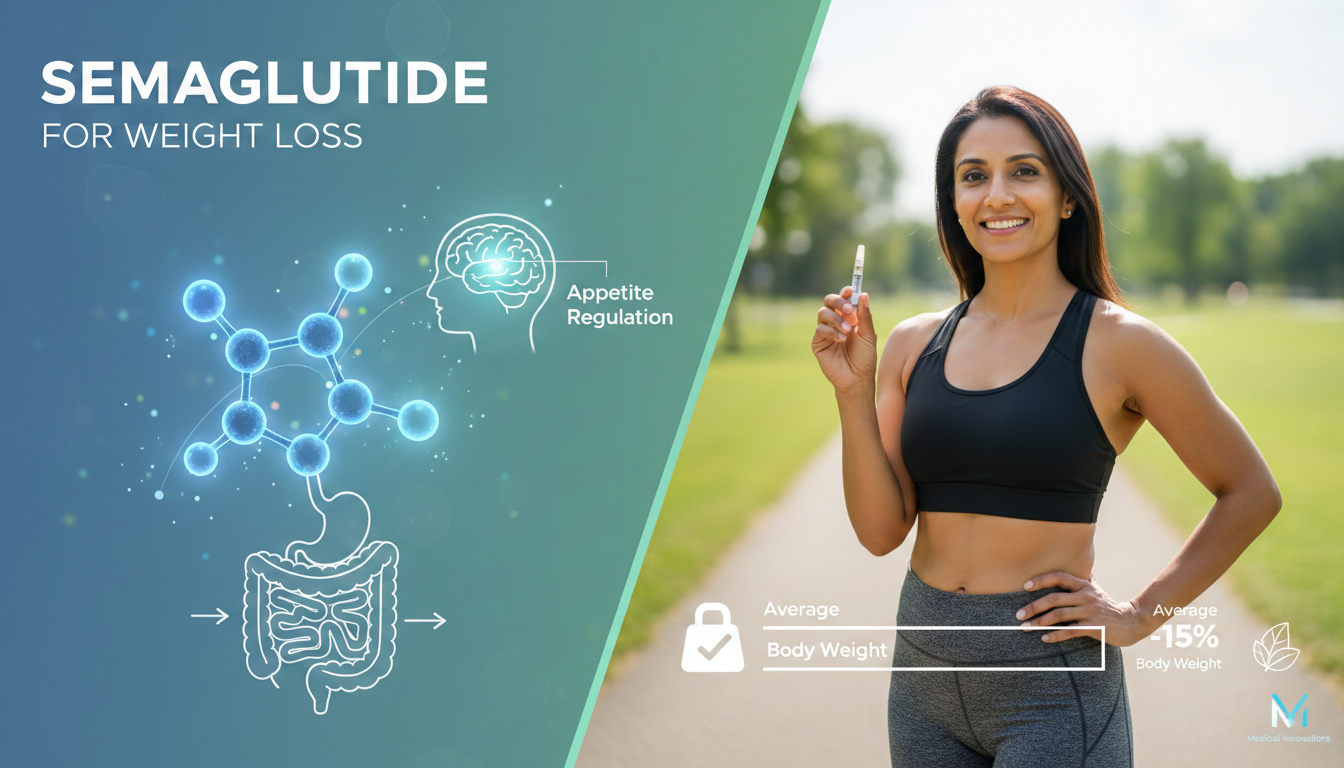
Semaglutide for weight loss has become one of the most talked-about medical breakthroughs of the decade and for good reason. Clinical trials show that patients using semaglutide alongside lifestyle changes can lose up to 15% of their body weight, a result previously only achievable through bariatric surgery.
But before you start, there are important things to understand: how semaglutide actually works, what realistic results look like, what side effects to expect, who qualifies and why physician supervision is the difference between short-term loss and lasting transformation.
This complete guide covers everything you need to know about semaglutide for weight loss, backed by clinical research and the real-world experience of LeanMD’s physician-led program.
What Is Semaglutide?
Semaglutide is a GLP-1 (glucagon-like peptide-1) receptor agonist — a medication that mimics a naturally occurring gut hormone. Originally developed to treat type 2 diabetes under the brand name Ozempic®, its dramatic weight-loss effects led the FDA to approve a higher-dose version, Wegovy®, specifically for chronic weight management in 2021.
Today, semaglutide is prescribed by physicians worldwide as one of the most effective non-surgical tools for significant, sustained weight loss.
Ozempic®0.5–2 mg weekly injection · FDA-approved for type 2 diabetes
Wegovy®2.4 mg weekly injection · FDA-approved for chronic weight management
Rybelsus®Oral tablet form · FDA-approved for type 2 diabetes
LeanMD physicians prescribe semaglutide in the form and dose clinically appropriate for each individual patient.
How Does Semaglutide Work for Weight Loss?
Understanding semaglutide’s mechanism explains why it produces results that diet and exercise alone often cannot. It works through several simultaneous pathways:
| Mechanism | What It Means for You |
|---|---|
| Appetite suppression | Signals the brain’s hunger center that you are full, dramatically reducing appetite without willpower battles. |
| Slowed gastric emptying | Food moves through your stomach more slowly, so you stay satisfied longer after meals. |
| Reduced food cravings | Clinical studies show semaglutide significantly reduces cravings for high-fat and high-sugar foods. |
| Improved insulin response | Improves how your body processes blood sugar, reducing fat storage and hunger-triggering spikes. |
| Lower caloric reward response | Brain imaging studies show reduced pleasure response to food, making it easier to eat less without deprivation. |
Semaglutide Weight Loss Results — What Does the Research Show?
The clinical evidence for semaglutide weight loss results is among the strongest ever recorded for a non-surgical obesity treatment. Key findings from the landmark STEP 1 clinical trial:
~15%Average body weight lost over 68 weeks (STEP 1 trial)
34 lbsAverage weight lost by patients on semaglutide 2.4 mg
83%of semaglutide patients lost at least 5% of body weight vs. 31% on placebo
Semaglutide Before and After — A Realistic Timeline
Results build gradually over weeks and months. Here is a typical progression for patients in a physician-supervised program like LeanMD:
| Timeframe | Typical Physical Changes | What Patients Report Feeling |
|---|---|---|
| Weeks 1–4 | Mild appetite reduction; early 2–5 lb weight loss | Less constant hunger; fewer cravings for sweets |
| Weeks 5–12 | Consistent weekly loss; 8–15 lbs for many patients | Smaller portions feel satisfying; more energy |
| Months 3–6 | Significant fat loss visible; 15–30 lbs for many patients | Clothes fitting differently; improved confidence |
| Months 6–12 | Approaching goal weight; 25–55 lbs lost | Better blood sugar, blood pressure, mobility |
| 12+ months | Transition off medication; maintaining results | Sustainable new lifestyle; reduced medication reliance |
Semaglutide Side Effects — What to Expect Honestly
No medication is without side effects. Being informed helps you manage expectations and recognize what is normal versus what needs medical attention.
Common Side Effects (Usually Temporary)
The majority of semaglutide side effects are gastrointestinal and occur in the first 4–8 weeks as your body adjusts. They typically improve as your dose stabilizes.
| Side Effect | How Common | How to Manage It |
|---|---|---|
| Nausea | Very common (40–50%) | Eat smaller, blander meals; avoid lying down after eating; eases after 4–6 weeks |
| Vomiting | Common (15–25%) | Stay hydrated; eat slowly; physician may slow dose escalation |
| Diarrhea | Common (20–30%) | Avoid high-fat meals; stay hydrated; resolves with time |
| Constipation | Common (20–25%) | Increase water and fiber intake; light movement helps |
| Fatigue | Moderate (10–15%) | Usually early and transient; ensure adequate protein and sleep |
| Headache | Moderate (10–14%) | Often linked to reduced calorie intake; stay hydrated |
Serious Side Effects — Know the Warning Signs
⚠ Contact Your Physician Immediately If You Experience:
- Severe or persistent abdominal pain (possible pancreatitis)
- Signs of an allergic reaction: swelling, difficulty breathing, or rash
- Rapid or pounding heartbeat
- Vision changes (possible diabetic retinopathy progression)
- Shakiness, sweating, or confusion — especially if also taking insulin or sulfonylureas
Who Qualifies for Semaglutide for Weight Loss?
Semaglutide (Wegovy®) is FDA-approved for adults who meet specific clinical criteria. A physician consultation is always the essential first step.
| You May Qualify If… | Semaglutide Is NOT Recommended If… |
|---|---|
| BMI of 30 or higher (obesity) | You have a personal or family history of medullary thyroid carcinoma |
| BMI of 27+ with a weight-related condition (hypertension, sleep apnea, type 2 diabetes) | You have Multiple Endocrine Neoplasia syndrome type 2 (MEN 2) |
| You have tried diet and exercise without sustainable results | You are pregnant or planning to become pregnant |
| You want physician-supervised, medication-assisted weight loss | You have a history of pancreatitis (discuss with your physician) |
| You are committed to a full nutrition and lifestyle program alongside medication | You are currently breastfeeding |
The Hidden Risk of Semaglutide: Muscle Loss
One of the most critical and under-discussed risks of using semaglutide for weight loss — especially without supervision — is the loss of lean muscle mass alongside fat.
When you eat significantly less (as semaglutide causes), your body can break down muscle tissue for energy if protein intake and resistance activity are not carefully managed. Losing muscle slows your metabolism, making it far harder to keep the weight off after stopping medication.
✅ The LeanMD Difference: Muscle-First Weight Loss
LeanMD’s physician-supervised semaglutide program is specifically engineered to prevent muscle loss. Every patient receives:
- Personalized daily protein targets based on current lean body mass
- Strength-focused movement plans introduced progressively
- Ongoing body composition monitoring — not just scale weight
- Nutritional supplements to support metabolic health throughout
Semaglutide vs. Other Weight Loss Medications
Semaglutide is not the only medication-assisted weight loss option. Here is how it compares so you can have an informed conversation with your LeanMD physician:
| Medication | Type | Avg. Weight Loss | FDA-Approved for Obesity | Key Consideration |
|---|---|---|---|---|
| Semaglutide (Wegovy®) | GLP-1 agonist | ~15% body weight | Yes (2021) | Gold standard; best long-term efficacy data; weekly injection |
| Tirzepatide (Zepbound®) | GLP-1/GIP dual agonist | ~20% body weight | Yes (2023) | Highest trial efficacy; newer to market; weekly injection |
| Phentermine | Stimulant appetite suppressant | ~5% body weight | Short-term only | Not for long-term use; cardiovascular risks |
| Orlistat (Alli®/Xenical®) | Fat absorption blocker | ~3–5% body weight | Yes | Oral daily pill; significant GI side effects |
| Naltrexone/Bupropion (Contrave®) | Dual-mechanism oral | ~5–8% body weight | Yes | Oral daily pill; not suitable for all patients |
What Happens When You Stop Taking Semaglutide?
This is one of the most searched questions about semaglutide for weight loss. Studies show that patients who stop semaglutide without a proper transition plan tend to regain a significant portion of lost weight within 12 months.
This is not evidence that semaglutide “doesn’t work.” It reflects the reality that obesity is a chronic condition requiring long-term management, and that medication alone — without building sustainable habits — is never the complete answer.
🔄 How LeanMD Prevents Weight Regain After Semaglutide
LeanMD’s 3-phase program is explicitly designed to protect your results:
- Phase 1 — Active Loss: Medication + muscle-protecting nutrition + 1:1 physician coaching
- Phase 2 — Transition (3–5 weeks): Gradual dose taper; adapting your eating habits to your new body
- Phase 3 — Maintenance (12 months): Building the mindset, habits, and strength to live your results permanently
Why Physician Supervision Is Non-Negotiable with Semaglutide
The rise of online pharmacies offering semaglutide without proper medical oversight is a dangerous trend. Here is why physician supervision matters:
- Dosing accuracy: Semaglutide is started low and escalated gradually over 16–20 weeks. Rushing this process significantly worsens side effects. A physician manages this precisely.
- Medical screening: Contraindications like thyroid cancer history or pancreatitis must be screened before prescribing.
- Muscle loss monitoring: Without body composition tracking, many patients lose as much muscle as fat — torpedoing long-term results.
- Medication interactions: Semaglutide interacts with insulin and other diabetes medications. A physician reviews your full medication list for safety.
- Long-term success plan: Medication creates the conditions for weight loss — but lasting results require a complete program with a structured maintenance phase.
Frequently Asked Questions About Semaglutide for Weight Loss
How long does it take for semaglutide to work for weight loss?
Most patients notice reduced appetite and early weight loss within the first 2–4 weeks. Significant, visible results typically begin around months 2–3. Maximum results are usually seen at the 12–18 month mark with consistent physician-supervised use.
Is semaglutide the same as Ozempic?
Yes — Ozempic® and Wegovy® both contain semaglutide. Ozempic is FDA-approved for type 2 diabetes (doses up to 2 mg), while Wegovy is FDA-approved specifically for weight management at the higher 2.4 mg dose. Your LeanMD physician will prescribe the appropriate form and dose for you.
Can I take semaglutide if I do not have diabetes?
Yes. Wegovy (semaglutide 2.4 mg) is FDA-approved for weight management in non-diabetic adults with a BMI of 30 or higher, or BMI of 27 or higher with at least one weight-related health condition.
Will I regain weight when I stop semaglutide?
Without a structured transition and maintenance program, many patients do regain weight after stopping. This is why LeanMD’s 3-phase program — including a dedicated 12-month maintenance phase — is critical to keeping your results long term.
Does semaglutide require a prescription?
Yes. Semaglutide is a prescription-only medication in the United States. Be cautious of any online source offering semaglutide without a proper medical consultation and physician oversight.
How is semaglutide administered?
Semaglutide is administered as a once-weekly subcutaneous (under the skin) self-injection, typically in the abdomen, thigh, or upper arm using a pre-filled auto-injector pen. Most patients find the injection easy and virtually painless.
Does insurance cover semaglutide for weight loss?
Coverage varies by plan. Many insurers cover Wegovy for qualifying patients with obesity-related conditions. The LeanMD team can help you navigate insurance requirements and prior authorization.
The Bottom Line on Semaglutide for Weight Loss
Semaglutide is not a magic pill — but it is the closest thing modern medicine has to one for weight loss. With proper physician supervision, a muscle-protecting nutrition plan, and a structured maintenance phase, semaglutide can help you achieve significant, lasting results that were previously only possible through surgery.
At LeanMD, semaglutide for weight loss is never prescribed in isolation. It is one powerful tool within a complete, physician-supervised medical weight loss program designed to help you lose fat, protect your muscle, and build the habits that make your results permanent.
Ready to Start Semaglutide the Right Way?
LeanMD’s physician-supervised program combines GLP-1 medication with personalized nutrition, muscle protection, and long-term maintenance support — so your results last.Find a LeanMD Physician Near You
Read More :- What Is Medical Weight Loss and How Does It Actually Work?